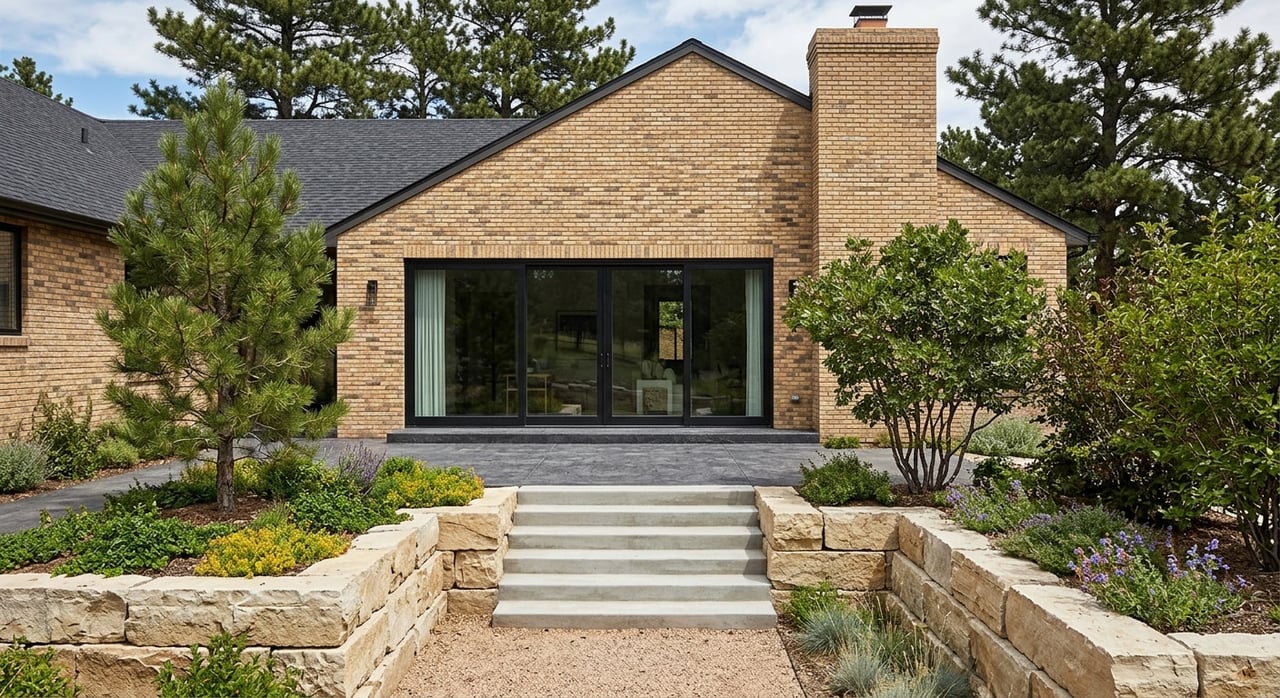
Thinking about building in The Canyons? It can feel exciting and a little overwhelming at the same time. You are not just choosing a floorplan here. You are weighing timeline, lot position, outdoor restrictions, long-term costs, and resale considerations in one of Castle Pines’ largest master-planned communities. This guide will help you sort through the biggest options and tradeoffs so you can make smarter decisions with more confidence. Let’s dive in.
Why The Canyons Feels Different
The Canyons is a large master-planned community in Castle Pines, east of I-25, with access at Exit 188. According to the City of Castle Pines, the area is planned for up to 5,000 residential units, 2.1 million square feet of mixed-use commercial space, 1,280 acres of open space, 316 acres of parks, 79 acres of school sites, and a fire station site.
That scale matters when you are building a home. In a community this size, your experience is shaped by more than the house itself. Your lot, your nearby land use, and the community’s review standards can affect how your home lives now and how it performs over time.
The ownership structure also adds an extra layer to understand. The Canyons has both a metro district and an HOA, and each plays a different role in daily ownership.
Know the Metro District and HOA Roles
In The Canyons, the metro district handles infrastructure, parks, trails, open space maintenance, and design review and covenant enforcement. The HOA owns and operates community amenities including The Exchange, the pool, The Green, and Canyon House, and it also handles trash service.
For you, that means budgeting goes beyond a mortgage and standard property taxes. Residents pay a district mill levy, a monthly district operations and maintenance fee, and HOA assessments. Trash service is also billed through the HOA.
This setup is not necessarily a negative. It simply means you should go in with clear expectations about recurring costs and community oversight before you choose a lot or sign on a build.
Start With the Right Build Timeline
One of the first decisions is how quickly you need to move. The Canyons offers both ready-now homes and homes that are still in the construction pipeline, so your timeline can shape almost every other choice.
If you want faster occupancy, a ready-now or near-complete home may make the most sense. You may have fewer opportunities to personalize finishes, but you can reduce uncertainty and move sooner.
If you have more flexibility, a longer build timeline may open up more choices around lot position, floorplan, and structural options. The tradeoff is patience. You may also need to make decisions earlier and live with them longer before move-in.
Compare the Current Home Collections
The current builder highlighted on the official community site is Shea Homes. The available collections span a broad range of sizes, layouts, and price points.
Here is a quick snapshot of the current product mix:
| Collection | Approx. Size | Bedrooms | Bathrooms | Starting Range | Notable Options |
|---|---|---|---|---|---|
| Reserve | 1,992 to 3,661 sq. ft. | 2 to 4 | 2.5 to 4.5 | From the $800s | Optional finished basement |
| Gallery | 2,078 to 4,966 sq. ft. | 2 to 7 | 2.5 to 5.5 | From the $800s to $900s | Ranch plans available |
| Retreat | 2,369 to 4,631 sq. ft. | 2 to 5 | 2.5 to 4.5 | From the $900s to about $1M | Optional finished basement |
| Luxe | 2,825 to 6,129 sq. ft. | 3 to 9 | 3.5 to 7.5 | From the $1Ms | Ranch, two-story, main-floor primary, multi-gen |
This range is one reason buyers are drawn to The Canyons. You can choose a more streamlined home with simpler living or a larger plan with more flexibility for guests, work, or future household changes.
Focus on Structural Choices First
When buyers picture a new build, they often think about cabinets, counters, paint colors, and lighting. Those are important, but in The Canyons the biggest long-term decisions are usually structural.
The hardest things to change later are square footage, bedroom count, ranch versus two-story layout, main-floor primary suite placement, garage capacity, multi-gen space, and whether to finish the basement. Those choices affect how the home functions every day and how adaptable it is over time.
That is why it often makes sense to spend more energy and budget on the features you cannot easily undo. Cosmetic finishes can usually evolve later. The floorplan and bones of the home are much more permanent.
Ranch vs. Two-Story Living
If you prefer fewer stairs or want more single-level living, Reserve and Retreat stand out because they include optional finished basements and are strong fits for buyers thinking about guest space or future flexibility. Gallery also includes ranch plans.
If you want a wider range of bedroom counts or a layout that separates living areas more distinctly, a two-story plan may work better. Luxe offers the broadest mix, including ranch, two-story, main-floor primary, and multi-gen layouts.
Neither choice is universally better. The right answer depends on how you live now and whether you want the home to support changing needs in the years ahead.
Basement Finish Tradeoffs
A finished basement can add useful living space, guest room potential, or room for hobbies and work. In a market where structural square footage matters, this can be a meaningful long-term decision.
The tradeoff is cost up front. If you are balancing budget with flexibility, it helps to ask whether finishing the basement now is more valuable than putting money into finishes you could update later.
Choose Your Neighborhood With Purpose
In The Canyons, neighborhood choice is not just about style. It can affect topography, view lines, access to trails, and the overall feel of your homesite.
Long Canyon, Scout’s Bluff, and West Slope are the ridge and ravine neighborhoods. Long Canyon emphasizes sweeping vistas and preserved open space, Scout’s Bluff follows natural ravines and ridges, and West Slope is set into the ridge with trail connections.
Ramble Park and Crossbridge feel more central and traditional. Ramble Park is described as the most traditional neighborhood, while Crossbridge terraces down toward Ramble Park and looks toward the covered bridge at the entrance.
Wild Oak and Peregrine lean toward preserve-style settings. Wild Oak is set among Gambel Oak, and Peregrine sits adjacent to Reuter-Hess Reservoir and is positioned as more set apart.
First Light is the largest neighborhood and centers on a broad range of ranch-style and paired homes with main-floor primary suites and fewer stairs. The community site also notes that some of the best views are here.
Protect Your Lot Choice Carefully
In a community like this, lot selection can carry as much weight as the home itself. One of the most important questions is what sits behind, beside, and across from your lot, both now and in the future.
The City of Castle Pines makes an important distinction here: empty land is not automatically permanent open space. Some land that looks undeveloped may already be approved for future development.
That means you should verify whether a backdrop is dedicated open space or simply land that has not been built on yet. If views, privacy, or open-space adjacency matter to you, this step is essential.
Questions to Ask About a Lot
- Is the land behind the lot dedicated open space or undeveloped land?
- What is the slope of the lot, and how might that affect yard use?
- Are there nearby trail connections or community traffic patterns to consider?
- Does the lot sit on a ridge, ravine edge, or more central street section?
- How much outdoor living space is realistically usable?
These details can shape day-to-day enjoyment and future resale more than a designer finish package.
Understand Exterior and Yard Restrictions
Many buyers love the idea of customizing the backyard after move-in. In The Canyons, that process comes with more structure than some buyers expect.
The design guidelines require approval before landscaping or making other on-lot improvements such as fencing, patios, decks, retaining walls, hot tubs, site lighting, dog runs, and play equipment. Plans generally must be drawn to scale and submitted for review, and the committee typically aims to decide complete submissions within 30 days.
There are also specific rules that can affect how you plan outdoor living. For example, fire pits must be gas-only, and unapproved improvements may need to be removed at the owner’s expense and could lead to fines or legal action.
Just as important, design committee approval does not replace local building, zoning, setback, or fire-code compliance. In practical terms, the house often gives you more freedom than the yard and exterior do.
Think About Resale From Day One
Even if this feels like your forever home, resale still matters. The most resale-sensitive decisions in The Canyons are usually the ones that are hardest to change later.
That includes lot position, view corridor, slope, bedroom count, primary-suite placement, basement finish, and garage capacity. Finish colors and exterior details matter too, but they generally sit below those structural choices in long-term importance.
The design guidelines are intended to preserve architectural and aesthetic quality, maintain compatibility with neighborhood standards, and protect financial investment. That can support consistency across the community, which many buyers value when they think about long-term ownership.
The district also states that it will maintain parks, trails, and open space in perpetuity. For buyers who care about amenity upkeep, that is part of the ownership equation, not just a sales feature.
Keep Expectations Realistic About Future Schools
The City of Castle Pines says land has been dedicated for a future school in The Canyons. At the same time, Douglas County School District decides when to build it, and the city cannot require a specific timeline.
That means an on-site school should be viewed as a long-term possibility, not a guaranteed near-term feature. If school assignment matters to your planning, it is better to work from current attendance information rather than future assumptions.
Douglas County School District identifies current neighborhood schools for The Canyons as Timber Trail Elementary for grades K through 5, Rocky Heights Middle for grades 6 through 8, and Rock Canyon High for grades 9 through 12.
What Building in The Canyons Really Comes Down To
The Canyons offers a polished version of new-construction living with meaningful choices around timeline, home style, lot setting, and community amenities. But the real tradeoffs are not just about finishes or upgrade packages.
They are about how carefully you match the lot, floorplan, and ownership structure to your life. If you make those choices well, you are more likely to end up with a home that fits now and still makes sense years from now.
If you are weighing builders, lots, and floorplans in The Canyons, a steady guide can help you compare what looks good on paper with what will actually work for your budget, timeline, and long-term plans. If you want thoughtful, high-touch guidance as you sort through your options, connect with Stephanie Brook for a personal consultation.
FAQs
What should you compare first when building in The Canyons?
- Start with timeline, lot position, floorplan type, and recurring ownership costs. Those choices usually matter more long term than cosmetic finishes.
What home styles are available in The Canyons?
- Current collections include a mix of ranch and two-story homes, with options for main-floor primary suites, optional finished basements, and some multi-gen layouts.
What fees do owners pay in The Canyons?
- Owners may pay a district mill levy, a monthly district operations and maintenance fee, HOA assessments, and trash service billed through the HOA, in addition to typical housing costs.
What should you ask about a lot in The Canyons?
- Ask whether nearby land is permanent open space or future development land, along with questions about slope, usable yard space, trail access, and the lot’s position within the neighborhood.
What outdoor changes need approval in The Canyons?
- Landscaping and many exterior improvements, including fencing, patios, decks, retaining walls, hot tubs, site lighting, dog runs, and play equipment, generally require design review approval.
What schools currently serve The Canyons?
- Douglas County School District identifies Timber Trail Elementary, Rocky Heights Middle, and Rock Canyon High as the current neighborhood schools for The Canyons.
Is there a future school planned inside The Canyons?
- Land has been dedicated for a future school site, but the district decides when to build it, so buyers should not assume a near-term opening.
