A buyer walks two homes on the same afternoon. Same square footage, same price bracket, both inside Castle Pines. One is new construction in The Canyons, framed studs still visible in the garage. The other is a resale a few miles away in Castle Pines North, built in the late 1990s with a mature yard and a kitchen that could use an update. On paper, the new build wins on price per square foot. Then the buyer asks about monthly costs and gets two different answers from two different entities, neither of which is the seller.
That split answer is the whole story in The Canyons. Most Colorado subdivisions have one governing body collecting one check. The Canyons has two, and they don't do what most buyers assume they do.
Two governments, one address
Homes in The Canyons sit inside both a homeowners association, the Canyons Owners Association, and a numbered metropolitan district. Depending on the specific parcel, that's District No. 1, 2, 4, 5, 7, or one of Nos. 8 through 11. These aren't marketing labels. They're separate units of local government, each with its own board, its own service plan, and its own capacity to issue debt. The Canyons Metropolitan District's own site lists them the way a city lists its departments, because functionally that's what they are.
In most Front Range communities, the HOA is the entity that reviews your paint color, enforces your fence height, and collects the dues that fund the pool. In The Canyons, that job belongs almost entirely to the district.
What the HOA actually owns
According to The Canyons Metropolitan District No. 7's own FAQ, the Canyons Owners Association owns and operates a specific, short list of assets:
- The Exchange Coffee House and Visitor Center
- The community pool
- The Green
- Canyon House, the resident clubhouse with fitness studios and a restaurant
That's it. Landscaping and parking tied directly to those facilities fall under the HOA too, and day-to-day management is handled by a third-party contractor, Blue Star. What the HOA does not do, and this is where buyers get surprised, is architectural review or covenant enforcement. The district's FAQ states this plainly: in other communities those functions typically sit with an HOA, but not here.
The paperwork that actually governs your remodel
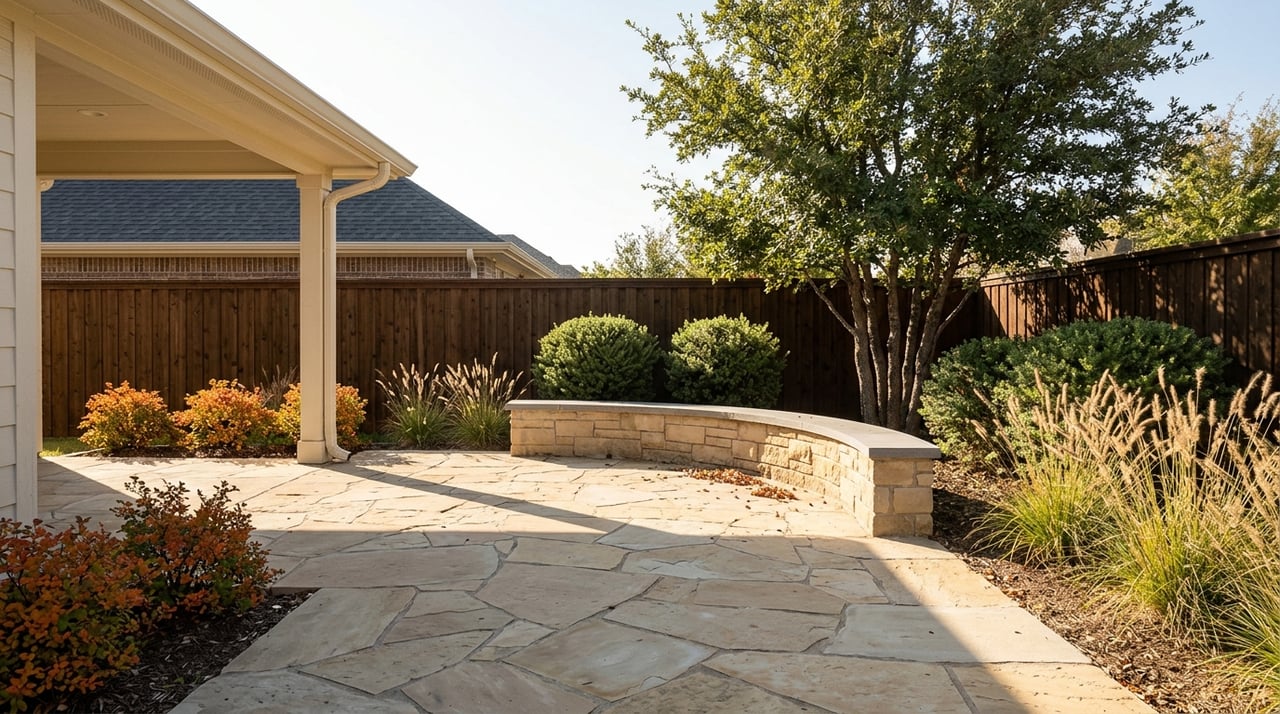
If you buy in The Canyons and later want to add a shed, repaint the exterior, or extend a patio, the approval doesn't route through an elected HOA committee made up of neighbors. It routes through the metropolitan district, the same government entity that also manages parks, trails, open space, and streets on behalf of the City of Castle Pines. For anyone planning renovation work before resale, staging a backyard for listing photos, or coordinating a builder upgrade package, that's worth knowing before you assume your HOA packet has the whole rulebook. It doesn't. The design guidelines live with the district.
The mill levy hiding behind the small monthly number
Here's where the real cost gets easy to miss. Builder disclosures for The Canyons tend to quote a friendly monthly figure. In one community plan built by Shea Homes at Canyon Village, the breakdown runs $145.65 a month for HOA-related costs covering the clubhouse, pool, and park operations, plus roughly $30 a month for metro district-related costs covering open space, landscape tracts, medians, community parks, trails, and the neighborhood's covered bridge. That same disclosure estimates property tax at approximately 1.14 percent of a home's sales price.
Thirty dollars a month sounds like nothing. But that operating fee is not the same thing as the district's debt service, and the debt service is where the real money sits. The Canyons Metropolitan District Nos. 1, 2, and 4 are authorized to issue aggregate debt of up to $475,000,000 and impose a maximum debt mill levy of 69 mills to repay it. District No. 5, a separate legal entity covering different parcels, carries its own authorization of up to $226,000,000 under the same 69-mill cap. That mill levy doesn't show up as a tidy line item on a builder's fee sheet. It shows up once a year on the Douglas County property tax bill, folded in with school district and county levies, easy to overlook until the bill arrives. Buyer guides tracking Douglas County's metro-district neighborhoods have put the added yearly assessment in these areas somewhere in the range of $1,500 to $4,000, on top of the base property tax that any Douglas County homeowner would pay regardless of HOA or district status.
Why price per square foot lies between here and Castle Pines North
This is the part that changes the comparison a buyer actually needs to make. New construction in The Canyons has been listed starting in the mid $700,000s, and that number looks efficient next to an established Castle Pines North resale that might carry a similar or higher price with an older kitchen and no mountain-view lot. But the psf math only tells half the story. Some parcels in Castle Pines North carry no HOA at all, which means the buyer comparing two homes at similar price points is not comparing two similar carrying costs. One comes with a mill levy funding hundreds of millions in district bonds. The other might not.
The same logic applies if you widen the comparison to Castle Pines Village, the gated section with private golf and 24-hour security. Village HOA dues typically run $300 to $600 a month depending on the sub-association, an entirely different fee model built around amenities and security staffing rather than infrastructure debt. Three sections of the same zip code, three different financial structures, and a psf number that doesn't distinguish between any of them.
What to ask before you write an offer
A buyer who understands this split asks better questions than "what are the HOA dues." Before an offer goes in on a Canyons property, it's worth confirming:
| Entity | What it controls | How it's funded |
|---|---|---|
| Canyons Owners Association (HOA) | The Exchange, the pool, The Green, Canyon House, related landscaping | Monthly HOA dues |
| Canyons Metropolitan District (numbered 1, 2, 4, 5, 7, 8–11) | Architectural review, covenant enforcement, trail and open space maintenance, infrastructure debt | Monthly operating fee plus a mill levy on the property tax bill |
Beyond that table, ask which numbered district actually covers the specific lot, since District No. 5's $226 million debt authorization is a different fiscal picture than the combined $475 million tied to Districts 1, 2, and 4. Ask for the district's most recent annual report, which each district files with the City of Castle Pines, and check whether a current disclosure notice has been filed with Douglas County, the way Canyons Metropolitan District No. 5 files its annual transparency notice. None of this is exotic information. It's public. It's just not the number printed on the listing sheet.
A few specific questions we hear
Is a metro district the same thing as an HOA? No. An HOA is a private nonprofit that manages covenants and common areas. A metropolitan district is a unit of local government with the power to levy property taxes and issue bonds for public-style infrastructure. In The Canyons, the two entities split responsibilities in a way that surprises buyers used to a single HOA handling everything.
Does the mill levy ever go down once the district's bonds are paid off? Each district sets its levy annually within the cap defined in its service plan, currently up to 69 mills for debt repayment in The Canyons. Whether a given year's levy rises, falls, or holds depends on that district's own budget and debt schedule, which is public and worth reviewing before closing rather than assuming it will track the builder's original estimate.
How do I find out which numbered district covers a specific address? The Canyons Metropolitan District's website includes a property lookup tool that identifies the exact district tied to an address and links to that district's current tax statement, budgets, and service plan documents.
Comparing homes across Castle Pines by price per square foot alone will always flatter the newer product. The real comparison happens on the tax bill and in the district's own filings, and that's exactly the kind of detail that gets missed when a buyer is moving fast in a competitive window. If you're weighing The Canyons against Castle Pines North or the Village and want someone to pull the actual district numbers before you write an offer, Stephanie Brook and the team at Inleit Properties can walk through it with you. Start your home story, request a personal consultation, and let's look at what the numbers actually mean for the house you're considering.
