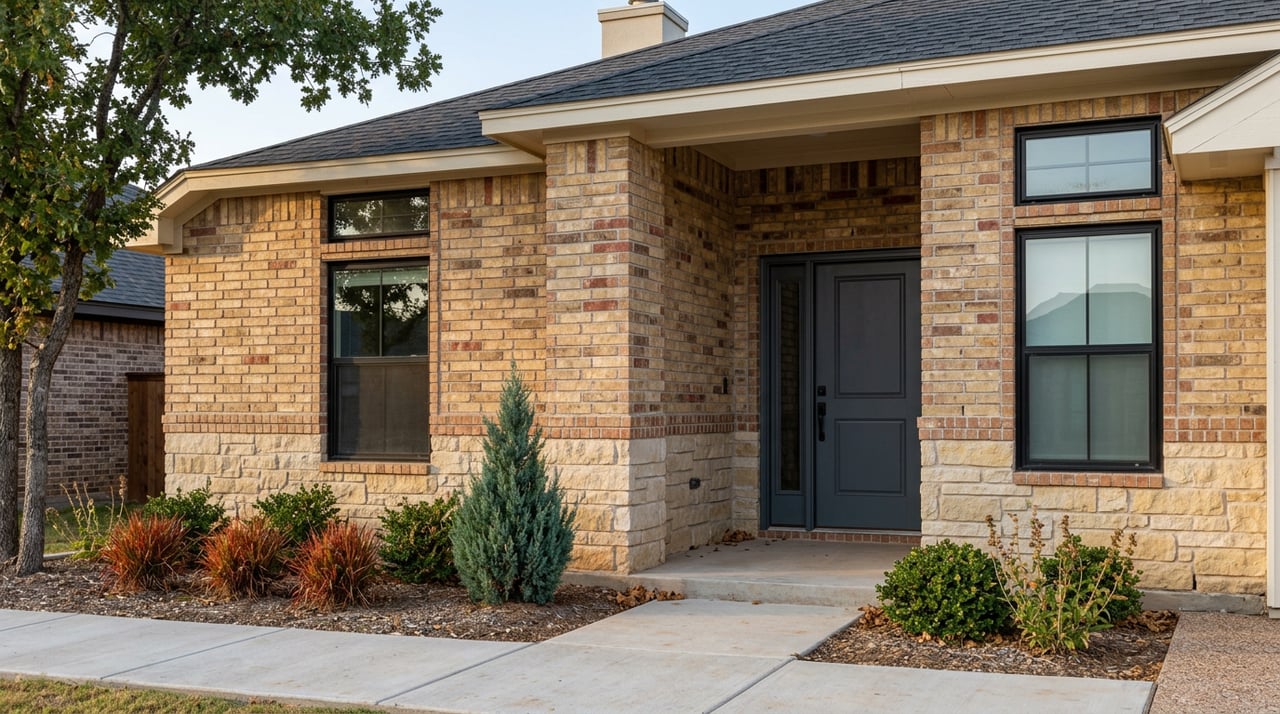
Two homes went on the market in The Canyons this summer within a half mile of each other. Both were roughly the same square footage. Both listed within a few thousand dollars of $999,000. One was a quick move-in build from Shea Homes. The other was a resale, owned for three years, freshly painted and staged by a family relocating for work.
On paper, a buyer cross-shopping those two listings would call them comparable. They are not. The new build came with a Flex Incentive worth tens of thousands of dollars and a below-market rate lock that never showed up in the advertised price. The resale had none of that, because there was no builder standing behind it able to offer it. Same number on the sign. Very different deal underneath it.
The Discount That Never Touches the List Price
As of early August 2026, Shea Homes is advertising Flex Incentives across its Canyons collections ranging from $35,000 to $75,000, layered with closing cost credits of $10,000 to $20,000 for buyers who finance through Shea Mortgage. On select quick move-in homes in the Luxe Collection, buyers who close by August 31, 2026 can lock a 7-year adjustable rate at 4.875 percent, a 5.68 percent APR, well under prevailing conventional rates. None of that discount appears in the list price a portal displays or a comp sheet pulls.
This matters more than it sounds like it should. A resale seller pricing against a new build down the street is not really competing against that build's sticker price. They are competing against the sticker price minus whatever the builder is willing to absorb that week to hit a closing target. Builders can move that number without ever touching the price field in the MLS. A resale seller has one lever: cut the actual list price, which shows up publicly and drags the whole street's comps down with it.
That asymmetry is the piece most buyers and even some sellers miss when they treat a Canyons listing and a Shea quick move-in as the same kind of transaction.
A discount that never touches the list price still changes what the house next door is worth.
A Market That Is Both Hot and Soft at the Same Time
Look at Castle Pines sales data from three different sources and you get three different stories, sometimes in the same month.
Over the three months ending May 2026, one widely used tracker put the median sale price at $999,000, up 12.8 percent year over year, with homes averaging 31 days on market compared to 24 days the year before. A separate tracker measuring closed sales over a trailing 30-day window ending around the same time reported a median of $993,501, down 10.3 percent year over year, with days on market up to 36 from 16. Same city, same rough window, opposite direction on the year-over-year trend.
By June 2026, another source had the median sale price still at $999,000, but average time to sell had stretched to 93 days, up from 70 the year before. Come July, that same source's active-listing data showed a median 125 days on market for homes currently for sale, alongside a $975,000 median list price. Days on market for closed sales, days on market for active listings, and year-over-year price direction are three different measurements, and none of them agree.
The 30-day snapshot has one more detail worth sitting with. In that window, 26.09 percent of homes sold above list price, up 14.3 percentage points from the year before. At the same time, 47.83 percent of listings had taken a price drop, up 9.6 points year over year. Those two numbers describe a market that is not moderately warm. It is split. Well-priced, well-positioned homes are getting bid up. Everything else is sitting long enough that the seller eventually cuts.
That split explains why the incentive question matters so much right now. A resale seller who prices at fair market value and holds the line is competing against new construction that can quietly discount without a public price cut. If that resale home does not move quickly, the seller's only visible option is the same price drop showing up in that 48 percent figure, even though the underlying value of the home has not changed. The market is not telling sellers their home is worth less. It is telling them their pricing tool is blunter than the builder's.
The Monthly Bill Nobody Puts in the Headline Price
There is a second number buyers routinely skip past, and it is the one that determines the real monthly cost of owning in one part of Castle Pines versus another.
Shea's own disclosures for its Canyons collections show a combined HOA fee of $145.65 a month, covering the Canyon Village clubhouse, pool, and park operations, plus a separate Metro District fee of $30 a month covering open space, trails, and the covered bridge that carries residents into the community. The Canyons is also served by several numbered metro districts, including Districts 1, 2, 4, 5, 7, 8, 9, 10 and 11, which fund infrastructure through a mill levy layered into property taxes. Shea estimates property taxes on a new build at roughly 1.14 percent of the purchase price.
Established communities on the other side of Castle Pines carry a different shape of cost. HOA dues in Castle Pines Village typically run $300 to $600 a month on their own, separate from any metro district mill levy that applies on top. A buyer comparing a $950,000 home in The Canyons to a $950,000 home in the Village is not comparing two homes with the same carrying cost. One bundles its dues into a lower combined monthly number. The other stacks a higher HOA on top of its own district tax.
| The Canyons (new build, Shea) | Castle Pines Village (established) | |
|---|---|---|
| HOA fee | $145.65 per month | $300 to $600 per month |
| Metro or district fee | $30 per month | Separate mill levy on top |
| Estimated property tax | About 1.14% of price | Varies by sub-association |
Neither structure is better on its face. They fund different things. But a price-per-square-foot comparison that ignores this line item is comparing two different monthly obligations while pretending they are one.
Questions Worth Asking Before You Compare Two Listings
- If a new construction listing carries an incentive, what is the expiration date and does it require the builder's own mortgage company to qualify.
- Does the quoted rate buydown apply to the home you are touring, or only to a specific set of quick move-in units.
- What is the combined monthly HOA and metro district obligation for this specific address, not the community average.
- What is the property's estimated mill levy rate this year, since new metro districts often carry higher near-term levies while paying down initial infrastructure bonds.
- When a comp is presented, is it a closed sale price, an active list price, or a modeled estimate, and over what window.
None of these questions require a lawyer or an accountant. They require someone who reads builder disclosures and district filings for a living, because those documents change collection by collection and quarter by quarter.
A Few Specific Questions We Hear
Does a builder incentive get reported as part of the sale price? Typically no. The incentive reduces the buyer's cost through credits or a rate buydown rather than a reduction in the contract price, so it usually will not appear as a lower sale price in public MLS data even though the buyer's effective cost is lower.
Can a resale seller offer something similar? A resale seller can offer seller-paid closing costs or a temporary rate buydown funded out of proceeds, but they are doing it with their own equity rather than a builder's marketing budget, which changes the math on what makes sense to offer and for how long.
Is Colorado's non-disclosure status part of why the numbers disagree? Colorado is one of the states where sale prices are not automatically part of the public record, so third-party trackers rely on a mix of MLS-reported figures and modeled estimates. That is part of why medians from different sources for the same window can diverge.
If you are weighing a new build against a resale in The Canyons, or trying to figure out what a similar price tag actually costs you month to month across Castle Pines, that is exactly the kind of comparison Stephanie Brook walks clients through before they write an offer. Start your home story with a personal consultation and get the real numbers behind the listing.
